Sharia Compliant Banking in Malaysia

One of the long running arguments on Islamic Banking in its current state is the level of compliance to the rules of Sharia. There are still many believers out there who are not really believing in Islamic Banking. There are many suspicions in the industry. The main one is that Islamic Banking is a copy of conventional banking with merely a Sharia wrapper around it.

Sharia CompliantThis view is admittedly hard to dispel, unfortunately. Especially in a market where the industry is running 2 parallel banking systems ie Islamic Banking and Conventional Banking side by side. Sometimes, there is an additional element ie Islamic Banking Windows where an Islamic Banking operation resides in a conventional banking, leveraging totally on the conventional banking infrastructure.

The Middle-East has been able to gain more focus on the development of Islamic Banking. Despite Malaysia being one of the prominent pioneers of the industry, the stability of what we are seeing in the Middle-East has been the focus of ensuring the products they offer are deemed more Sharia compliant. While Malaysia is coming out with innovations to catch up with competition from conventional banks, the Middle-East is looking to products they already have and improving them to ensure Sharia compliance, fully backed by an international Shari’a framework.

This is clearly a different approach to the development between the two Islamic Banking industry.

In my view, the Middle-East has a clear advantage when in comes to sustainability. The advantage is simply this; the wants of the consumer. The Middle-East consumer simply WANTS Islamic Banking. No question about it. The consumers are split to either want Islamic Banking or does not want Islamic Banking. The trend is shifting away from the view that they are indifferent to any banking structure. There is a growth in preference for Islamic Banking, and this is the main driver for the development of the industry.

Malaysia, on the other hand, has a different set of consumers. The Malaysian consumers, whom may be just as pious as their Middle-Eastern brothers, continues to view the Islamic offerings with deep suspicion, which mould the attitudes towards Islamic banking industry. Admittedly, some Islamic Banking contracts have been disputed, tested and contested in a court of law, and in some cases the banks are not able defend these contracts properly. Reputational damage done; and some quarters have taken advantage in making the molehill bigger than it really was.

In Malaysia, the consumers only want and expect certain things from their banking product; cost savings features with full benefits, cheap pricing and easy to use. There is strong preference for Islamic Banking products but if there is a better alternative in the conventional banking space, the attitude is “Why not?”. At the end of the day, it all comes down to dollars and sens; “How much does it cost, what savings do I get, how much do I save”? Islamic or non-Islamic? It is all about what money I earn or save which I can use for my family and myself.

Maybe economic standing of the consumers do play a part. A product in Malaysia seems to be more about justice, even if it is just a misplaced perception, and therefore it must be cheap. Islamic Banking products in Malaysia have evolved significantly since its inception in the early 80’s. It is now more equitable, competitive and in many cases, has more “justice” elements in its structure. The issues that may arise 10 years ago, in my view, has already been looked at and smoothed out.

Bank Negara Malaysia (BNM) has introduced many measure to support this idea of justice. The Ibra guidelines to ensure equitable settlement. Regulated Late Payment Charges to ensure consumer rights are protected. Synchronisation with the conventional banks on Responsible Financing and Product Transparency. Tight regulations of the Fees and Charges that an Islamic bank can charge to consumers. Does anyone know how rigorous the process BNM has imposed to approve fees and charges that an Islamic Bank can charge? 4 levels of approval at BNM, even after the Bank’s internal Sharia Committees have approved those charges. To get approval from the internal committee is already tough; to go to BNM to get the final approval is not something we look forward to.

These are good steps, but is it enough? Will the Malaysian consumer take that quantum shift to buy into Islamic banking products?
SSBAs I mentioned earlier, the main difference between what’s happening in the Middle-East and Malaysia is the consumer preference. In Malaysia, the consumer wants a product that provides justice to them, whether it’s pricing or features or convenience. Islamic or otherwise, it’s the job of Islamic Banks to win them over.

Therefore, this difference in the consumers mindset in the Middle-East may eventually be an important factor. Since Middle-East consumers just WANT Islamic banking, the industry there is given the benefit of the doubt for its development. Because of this, the emphasis of the development is more on Sharia compliance rather than just pricing, features and innovation.
fatwa

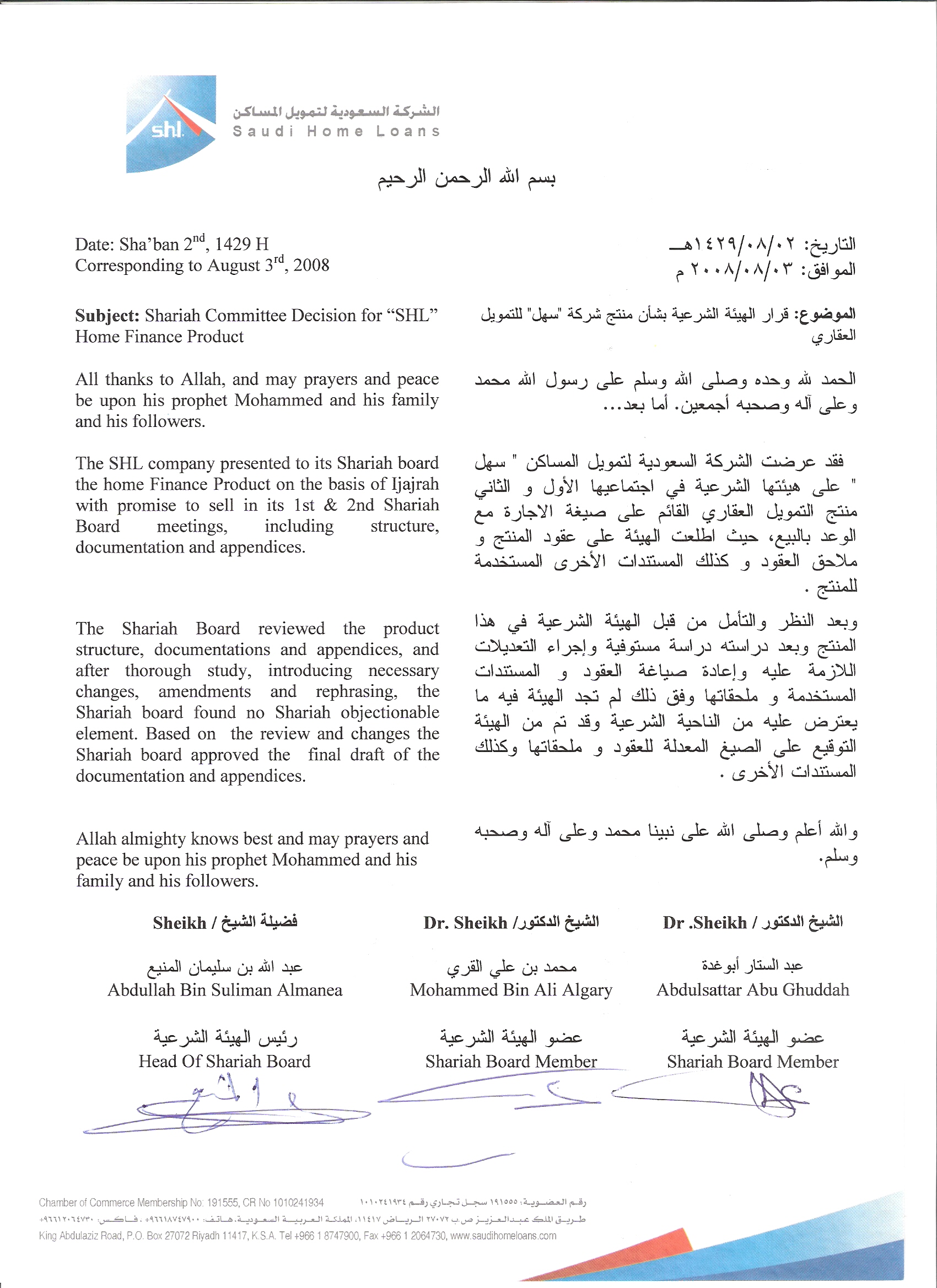
My limited experience in the Middle-East led me to one important conclusion; consumers want the comfort that when they choose Islamic Banking, the product must assure it meets the Sharia compliance required. By this, it is important to know the people who develop and approve the products. Great weight is placed on the names and reputation of the Sharia scholars themselves. Consumers genuinely want to know who approves the product structure, and want to see the scholars stamp on it. Requests for a copy of the fatwa governing the approval of the product is a norm in the Middle-East. As mentioned, the emphasis is on Sharia compliance, more than merely pricing. There is a huge trust and confidence in the Sharia scholars themselves, in their ability and the quality of decisions made on the products.

For that, I do applaud the consumers who chose Islamic Banking for looking beyond pricing. Many times I have been asked to furnish details and profiles of the Sharia scholars who approved the products. The decision to buy the product is more often than not, based on these profiles. The assurance of Sharia compliant banking became more important, even though there are better pricing elsewhere. And I believe that product innovation will have to come naturally once the performance of the Islamic banking industry is in the upswing. Competition and customer feedback drives innovation, but in the first place we need the right customers asking for the right solutions to be banking with us. As pricing and feature becomes the second priority, the Middle-East banks will be well placed to take a step back and assess compliance and therefore build consumer confidence organically.

Furthermore, many corporates and government-linked institutions mandates their financial dealings to be Sharia compliant, even making it part of their constitution and governance. This will drive the demand for Sharia compliant banking even more. With a ready market seeking, looking and wanting Islamic products and services, one can foresee a sustainable growth in the industry.

I don’t know what can possibly change the consumer mindset for this in Malaysia. Until then, we will always be playing catch up with the conventional banks even when BNM is pushing for a more wholesome Sharia compliant banking system. It could be a painful transition that the Banks will find difficult to stomach when the existing structure seemed to be working well. But without this change, will the industry ever make that quantum leap?

It’s catch-22. Someone needs to be bold enough to see it out, bite the bullet and draw that line in the sand; take a chance on Islamic banking with confidence and without so much suspicion. Maybe that is what is needed to make that paradigm shift in consumers.
Synopsis of 2013 BNM Exposure Drafts

The following is what I understood from the various Exposure Drafts issued by BNM on 9 December 2013. Of the 7 exposure drafts that we received, I have earlier summarised the Wadiah Exposure Draft, and I will ignore the Bai-Inah Exposure Draft as we are no longer subscribing to the Bai Inah structure at the workplace.

Please find the remaining Exposure Draft review for your understanding.

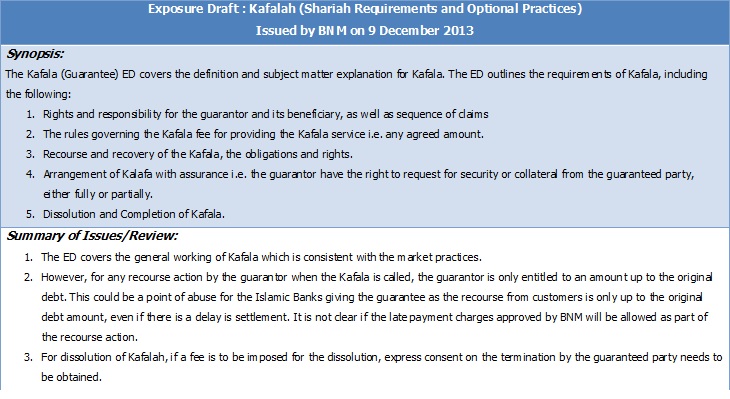
Kafalah ED

2013 ED – Kafalah – One of the key issues for a Kafala (Guarantee) contract is the charging of fees for providing the guarantee services. The main issue has always been the quantum of fees charged, either in percentage of the financing or via a fixed charge for all financing amount. The justification of this charge is always tricky, because technically the fee should not be imposed if there is no call for the guarantee (in cases of no default). The guarantee will only materialise if the customer defaults, that’s when the work happens to justify any fees. Issuing a piece of paper at the start of the relationship to guarantee the amount does not amount to too much work, and there no funds disbursed to any parties (unfunded). To justify the charging of any fees based on percentage instead of actual work, especially for huge amounts of financing guarantee, can be problematic to justify in the eyes of Sharia.

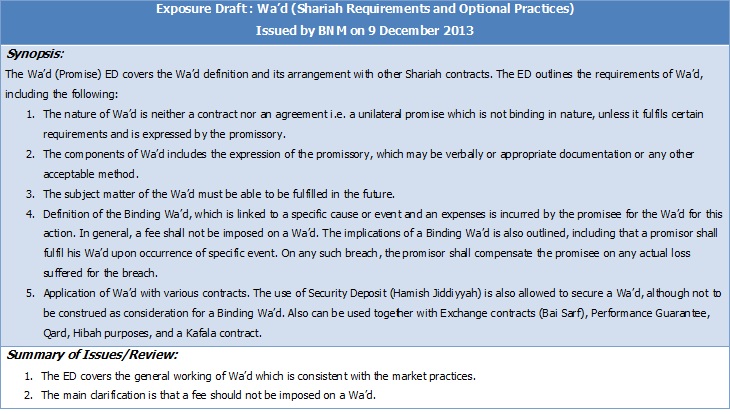
Waad ED

2013 ED – Wa’d – At one point of time, Wa’ad (Promise) seems to be the answer to many structures, where a promise is given without any requirement to transact before a specific event. The terms therefore can be negotiated and re-negotiated without the need to strictly specify the terms of the transaction and re-signing of documents. This gives a lot of leeway for deals to happen.However, at the end of the day, Wa’ad remains as only a promise, legally distanced from a contract or an agreement. Enforcement at the courts are therefore without full confirmation of all the terms, and makes for a loose structure and potential disputes. This flexibility and enforceability remains one of the key risks to a Wa’ad contract, which is why until today Wa’ad is generally transacted between known parties i.e. between established and trusted Financial Institutions.

Wakala ED

2013 ED – Wakalah – Wakala (Agency) will remain an integral contract for Islamic Banking as it validates a lot of action that can be done by the Bank, in order to remain efficient. In general, Banks hold a lot of expertise in various fields, such as investments, financing, leasing and trading; something a normal customer may not want to be involved in on a daily basis. An Agency arrangement conveniently provides for this. Anything that improves the efficiency by leveraging on the Bank’s expertise and infrastructure, can be arranged via Agency. However, the way we practice it usually is transparent to the customer. In practice, Agency Fees are the right of the Agent, and the waiver of such fees, although allowed, is sometime seen as not adhering to the spirit of Agency and entrepreneurship. You do the work as an Agent, but don’t earn any fees as it is waived. In real life, this does not happen as whenever a work is completed, you should earn something.

Tawarruq

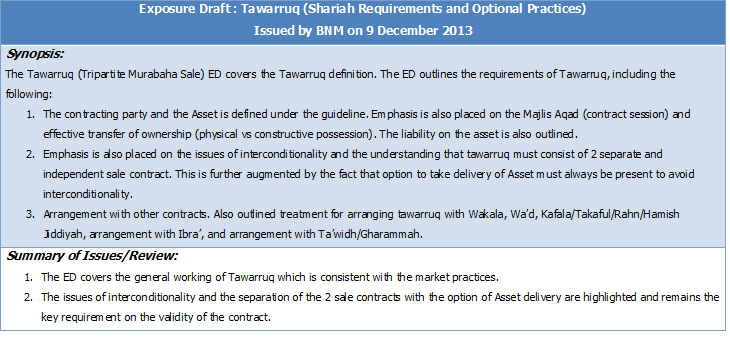
2013 ED – Tawarruq – As Tawarruq (Three-party Murabaha Sale) becomes more prominent in the Malaysian market, I was surprised that the ED was not more comprehensive than this. There are sequencing issues not addressed but more importantly, there is a lack of illustration on what is defined as Tawarruq. Is there any difference between a Tawarruq and Commodity Murabaha, which essentially is a 4 party transaction? The issue of interconditionality is adequately addressed in the ED but I would love to have seen more details related to products, such as for Islamic Credit Cards and Revolving Credit with a rebate structure (Ibra’) based on a floating rate financing. It mentions that the discount can be given based on certain benchmark agreed by the contracting parties. This opens the clause to various interpretation as it is without real detail.

I will look at the Hibah (Gift) ED but essentially, it is related to the Wadiah ED. Most of what’s covered under the Hibah ED is relevant to the Wadiah product, such as the discretionary Hibah issue and the giving of Hibah becoming a business practice (Urf Tijari) which can be construed as Riba (Usury). Wait for the posting.

Thank you for reading, hope everyone have an enjoyable holiday period ahead. Wasalam.

Readings : December Papers x 3

Murabaha

And to close off the year, BNM gave us a further 3 reading gifts for us to enjoy our holidays:

  1. Murabahah (2013)
  2. CP Mudarabah (SR,OP, OR)
  3. CP Musharakah (SR,OP,OR)

The Murabahah Standards looks interesting, and so is the Mudarabah Concept Paper. Do have a read and tell us what you think.

Looking forward to the coming holidays.

Exposure Draft : Wadiah

Image

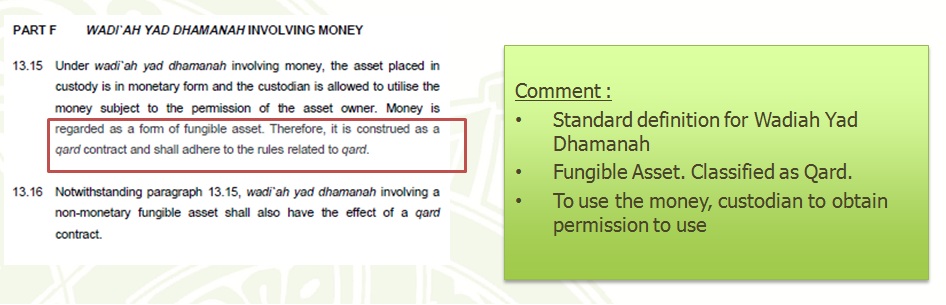
One of the panic buttons we are pressing now is the new Wadiah Exposure Draft (ED). As a rule, Wadiah is a “safe-keeping with guarantee” arrangement, where a Bank agrees to take on-board customers deposits as a loan (Qardh). And in the rules of loan under Islamic Banking, a loan must be returned on the same amount when required; any amount above and beyond the loan amount, if put as a condition at the start or during of the deposit placement, may be construed as “Riba”. If the Bank utilises the deposits for any business activities, the Bank is given the discretion to award “Hibah” or gift payments allocated based on the balance outstanding.

With the introduction of the IFSA and the requirements that Malaysian Banks comply with the Investment Account Framework  if Mudarabah continued to be offered to Customers, the common wisdom is to migrate lock-stock-and-barrel into a Wadiah account. In my earlier writings, I already mentioned that to comply with the Investment Account Framework, a massive shift in thinking, processes, and management is required. Therefore to convert into a Wadiah structure may not be the ideal solution, but it will provide an “easier” route towards retaining Customers’ deposit.

Wadiah ED

However, in this chess game between the Islamic Banks and Bank Negara Malaysia (BNM), the new ED is introduced on Wadiah has effectively further tied the hands of the industry players. BNM had anticipated the industry intentions to move the Mudarabah structure into Wadiah, and promptly outlined further restrictions on Wadiah itself. The industry is now caught between a cold and hard place; stay with Mudarabah and comply with Investment Account Framework, or migrate into Wadiah and comply with the new Wadiah Guidelines.

Wadiah Concept Paper

As we know, Wadiah also puts significant limitation on the marketing of returns and benefits to customers for their deposits. BNM took this a step further; to emphasize that returns on a Wadiah account should always be discretionary, as Wadiah is now seen as a loan. The impact comes in several clauses in the Exposure Draft:

  1. Wadiah Yad Dhammanh is considered similar in nature to Qard. Therefore the rules of Qardh should also apply to Wadiah.
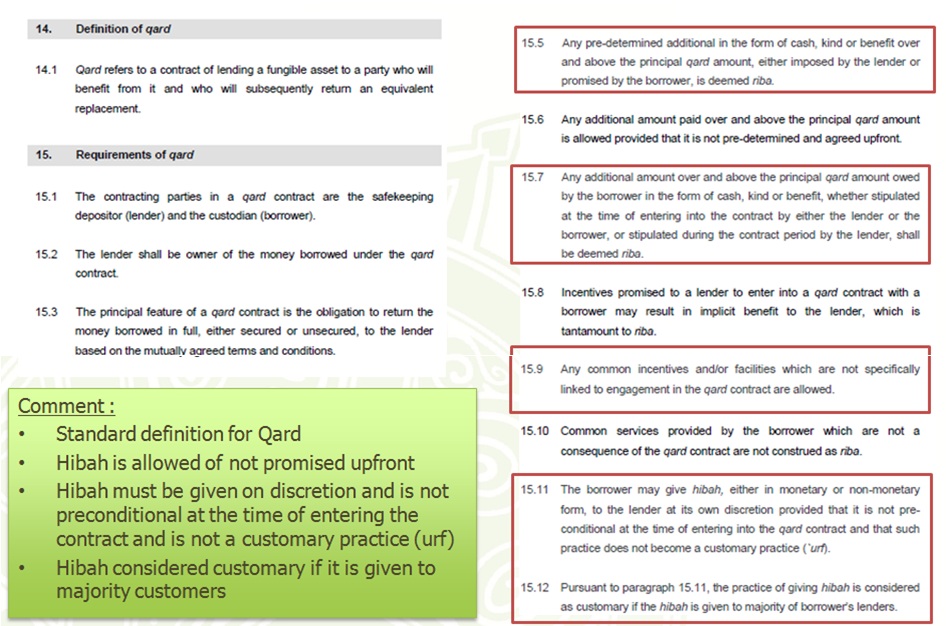
  2. A majority of customers should not be getting a return on the deposit under Qardh. Generally this is saying that out of 100 customers, only 49% of customer will be given a “gift” on their deposits
  3. The payment of the discretionary “gift” should not be construed as regular or common business practice (Urf’ Tijari) else it will imply that the “gift” is a constant return to the customer. Historical performance can be shown to customers.
  4. Any benefits, monetary or otherwise, deriving directly from the placement in the Wadiah account may be construed as “Riba” as well.
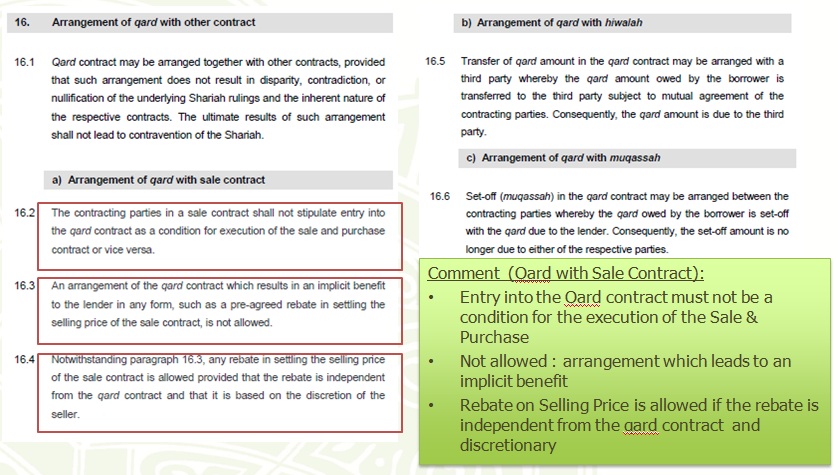
  5. Any benefits includes scenarios where should the Wadiah account be opened as part of a financing facility, and benefits enjoyed in the financing facility from amounts available in the Wadiah account (for example a rebate structure to off-set an obligation), shall be construed as riba’ as well.

My main question is; now that Mudharabah is turned into a pure investment account, and Wadiah carrying so many restrictions, what other solutions are there? It cannot be that BNM only expects us to comply but do not help with a viable solution on these restrictions. Yes we are looking at the Commodity Murabahah structures, but operationally this will be a challenge for the Banks to control the cost of commodity trade.

Wadiah ED

And how do we define majority, then? The system must now be enhanced to determine who gets the discretionary “gifts” based on which formula. Even if they qualify for the discretionary “gifts”, to award them on a regular basis will also lead to it be construed as “Urf Tijari”, where consistent payment of Hibah will imply a similar future returns. How do we define this “non-majority” of Customers whom qualifies for Hibah but do not get regular awards of Hibah? What system logic can we build and will what we build be acceptable to Sharia? More importantly, would the customer even accept such “discretionary” practice?

Now that BNM has issued a new Concept Paper on Shariah Requirements, Optional Practices and Operational Requirements of Mudarabah today, we get a somewhat watered-down requirements to Mudarabah products. I have read it and saw that under this new Framework, the Mudarabah structure remains viable as it is, with enhancements needed for documentation and disclosures. Manageable and workable. The next steps must be; if we were to stick with Mudarabah, which Framework will take precedent. Mudarabah is an Investment structure. So, would we follow the Mudarabah Framework, or to comply with the Investment Account Framework? Both Frameworks makes reference to each other; yet one is stricter than the other.

I am putting all my hopes on the new Framework. That will give me some leeway of having both Wadiah structure and a viable Mudarabah structure (not based on the Investment Account Framework). This is definitely the light at the end of the tunnel. But as usual, indications are to take the “stricter” guidelines into account, rather than keeping hope for an easier implementation.

Exposure Drafts for 2013

ImageToday we are given additional reading materials; Exposure Drafts!!!

By my last count, 7 new Exposure Drafts was published by BNM yesterday and now it is time to digest them. As it is, there is so many to digest already. Quick and fast after the Bai-Inah clarifications in late 2012, we were given tight deadlines for the IFSA bill to comply. Add to that, the IFSA “forces” us to re-look at the Investment Account Concept Paper and the Rate of Return Framework if we were to look at retaining a Mudaraba or Wakala deposit structure. Then comes the deadline that the compliance to the Investment Account concept paper is to be met by 30 June 2014.

More sleepless nights? Yes, especially since the industry is struggling in coming up with a Current Account Savings Account alternative to Mudaraba.

Now we welcome the new Exposure Drafts and the boss has given me 2 days to read the relevant ones. Will I be able to digest them? The names of my new friends as follows:

  1. Exposure Draft for Wakalah
  2. Exposure Draft for Wa’d
  3. Exposure Draft for Bai Inah
  4. Exposure Draft for  Hibah
  5. Exposure Draft for Tawarruq
  6. Exposure Draft for Kafalah
  7. Exposure Draft for Wadi`ah

And generally, Exposure Draft is like the engagement before a marriage. You may give feedback, but the deal is already on. It is just a formality.

This will make for an interesting reading, and an even more interesting new year.

Back To Wadiah

Investment Account Guidelines

True to form, BNM have called for an urgent discussion with the industry players on the implementation of the IFSA. The message is very simple; industry players are given time to comply to the IFSA i.e. no later than 30 June 2015. During this time, we are asked to either:

  1. Retain Mudharabah and Wakala structures to comply with the Investment Account guidelines; or
  2. Move the Mudharabah and Wakala structures into an alternative structure.

Obviously no one has the answer to both options. Especially for Current Account and Savings Account now offered under Mudharabah. To retain a simple product such as Savings Account under Mudharabah, the Bank needs to comply with tedious risk profiling of customers and numerous disclaimers on investments. Customers will be confused by this arrangement, and we foresee many will stay away. Marketing wise, it is a nightmare. Operationally as well, if we were to comply with the investment disclosures. Gone will be the simple structures that customers are used to.

Bringing the Current Account and Savings Account into Commodity Murabahah structures is the most viable solution in Shariah’s perspective. However, operationally tedious, money required for system development, revised documentation and more importantly, building customer awareness and acceptance will be the main challenges for the industry to move to this alternative.

Committees were promptly set-up to discuss solutions, and as expected, there can be no commercial viability into moving to Commodity Murabahah, at least not in such a short period of time. For Time Deposits it is possible, but how to address the daily deposits and withdrawals of funds in a Current or Savings Account under Commodity Murabahah?

The easy solution; take a step backwards.

Wadiah is suddenly the solution. Most Banks has decided to migrate back into Wadiah structures, even with limited value proposition. Hang on, this is not the solution. Perhaps only workable for a short term stop-gap measure, but definitely not feasible for moving forward, especially when there is a conventional banking alternative.

Wadiah is definitely not the solution for deposit building. But then, what else is there? Until someone comes up with a brilliant solution, we will have to make the best of what Wadiah has to offer.

The Islamic Financial Services Act

IFSA

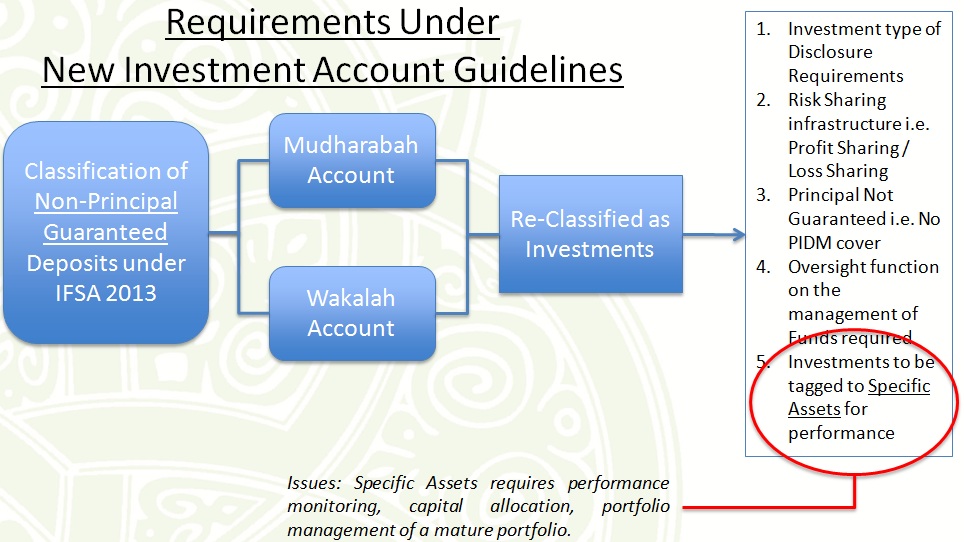
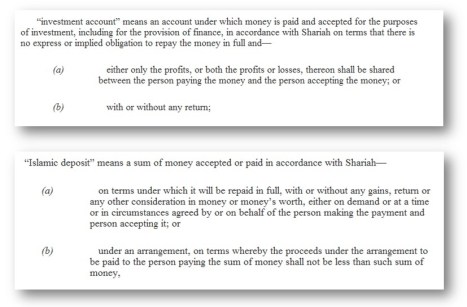
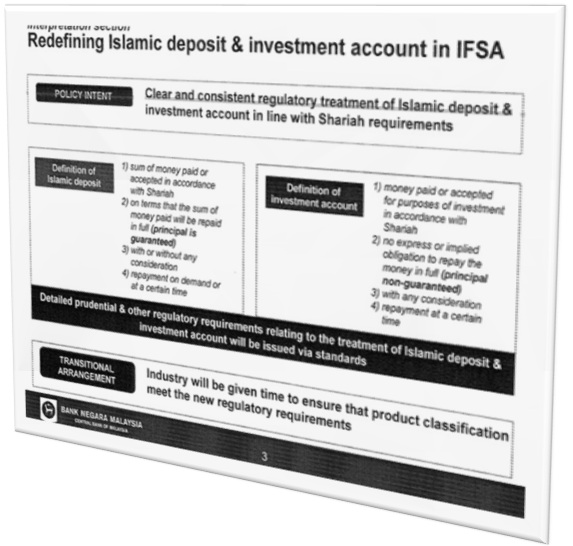
The Islamic Financial Services Act (IFSA) 2013 was introduced to streamline the Islamic Banking definitions and practices. With the introduction of this Act, we obtained clarity on many matters, but not all of it is in our favour. From the Act, we see a significant re-defining of the Deposit product. Needless to say, the Islamic Banking industry is at arms on this new definition.

IFSA DEF

But to classify it as a new definition is also not entirely accurate. We have been taking in Mudaraba-based deposits as our main method of accumulating deposits in the Bank. Mudaraba by nature is profit-sharing investment arrangement for the purpose of obtaining a return. Any profits arising from this investment will be shared amongst the entrepreneur and the capital provider based on agreed ratio; whereas for any losses, it will be borne by the capital provider, unless the entrepreneur is proven negligent. In all intent and purposes, this is an investment, rather than deposits.

However, while there is a risk to the investment, this is mitigated by way of investing in low risk intruments, profit equalisation or even gift (hibah) to ensure a customer’s capital is not lost. Technically an investment, but with indirectly guaranteed capital due to the above mechanisms. Furthermore, this is augmented with the deposit insurance offered by the Malaysian Deposit Insurance Corporation (PIDM) which insures the customer’s deposit with the Bank, should a Bank goes belly-up.

With such assurances, Banks have taken these Mudaraba placements as “Deposits”, categorised internally as part of the Core Deposits calculations i.e. low risk deposits. Why this is important is because if you have higher Core Deposits in your books, you can therefore fund a higher proportion of your financing portfolio, without adding more Shareholder’s capital. Technically, under the Loans to Deposit Ratio (L/D Ratio), the Bank can hold a bigger financing portfolio the higher the Core Deposit amount.

This is the desirable outcome. To collect higher “Core Deposits” via Savings Account, Current Account and General Investment Account (Term Deposits).

With the new IFSA, the Core Deposit definition is redefined.

  1. If the return of the customers deposit (capital) can be guaranteed, this capital is classified as Deposits.
  2. If the return of the customers deposit (capital) cannot be guaranteed, this capital is classified as Investments.

With this, the industry is turned on its head.

Redefining Deposits

Obviously, a Mudaraba, or Wakala fi Istihmar (Agency for the purpose of Investment) will be classified as “non-Core Deposits”. The nature of Mudaraba is investment, and no matter what mechanism one puts into the product to “protect capital”, one cannot GUARANTEE capital due to the potential of loss. This risk sharing is one of the key tenets of a Mudaraba arrangement. By keeping to this tenet, Mudaraba should be classified in its rightful place i.e. Investment.

As mentioned, removing the deposits as reclassifying it into Investment has significant impact on the L/D Ratios.

But also, what’s worrying is that to keep Mudarabah (or Wakala), now defined as Investments, there is a separate Investment Account Guidelines which the Banks will have to comply with. Now that’s another story.

As an industry, we are faced with an option of either:

  1. Building our Core Deposits via an alternative product which Guarantees the capital. We have the readily available Wadiah structure, which is similar to a Qard deposit structure where no benefits can be offered or promised to the customer for their deposits; or
  2. Comply with the Investment Account Guidelines to keep with Mudaraba or Wakala Investment, but will not be able to include those amount into the Core Deposit calculations; or
  3. Develop new deposit structures that will meet both the Deposit definitions and meet customer demands for returns on their deposits and savings. Unfortunately, the available structures in the market requires extensive capital and technological enhancement, while operationally not viable. The industry as a whole has so far not come up with any viable proposition. Research has been done but the disadvantages of such structures outweigh the benefits.

This re-classification, may on the onset, looks a simple thing. But the impact is huge. The risk of capital flight is significant, possibly flight into conventional banking if the consumers are not able to accept the risks of investments or the returns uncertainty of deposits. It will be interesting to see what the industry comes up with.

I remember following BNM briefing on the re-classification back in 2011, the boss has asked me to come up with a Term Deposit under the contract of Wadiah. He knows it is not feasible, but still he asked for it. It only reflects how desperate the time will become when the full significance of the Act is enforced on us.

Now that it is enforced, I wondered if the rope around my neck is long enough.

Conversations on Islamic Banking in Malaysia

Malaysian Islamic Banking industry is undergoing a massive structural change. I was a bit surprised when we had visits from several research institutions asking Islamic Bankers on opinions on how to make Islamic Banking in Malaysia more “Islamic”. From those discussions, I got the impression that the Central Banks is really pushing the Islamic Banking agenda, which will be a quantum jump away from the current model of “replicating” the conventional cousin’s model. This quantum leap also means that the model that Central Bank envisioned will be substantially different to the Islamic Banking model practised in the major geographies in the Middle East.

What we practitioners picked up in the discussions were the persistent questions of:

  1. Why has banks not started to offer products based on more “Islamic” products such as Musyaraka financing or Mudharaba financing?
  2. What does bank think about contracts such as Salam?
  3. What does the bank think about the leveraging model i.e. the management of Islamic funds via the conventional Treasury function?

This line of question leads to the impression that the standard banking model should be evolved into a more “Islamic” structure of risk-taking, profit-sharing, venture-financing and cleaner utilisation of customer investments and funds. This is a clear departure from the traditional way a bank is set-up, whether pure Islamic Bank or Islamic-windows operation. The only response we can give was: The above products requires a different view on risk-taking and credit, and moves closer to the model of venture-capitalist and development banks. Traditional bankers will not be able to assess the risks on such products, and shareholders will be open to a higher risk-profile to demand a higher return on their funds.

ISLAMIC BANKING MODEL : HOW DIFFERENT IS DIFFERENT?

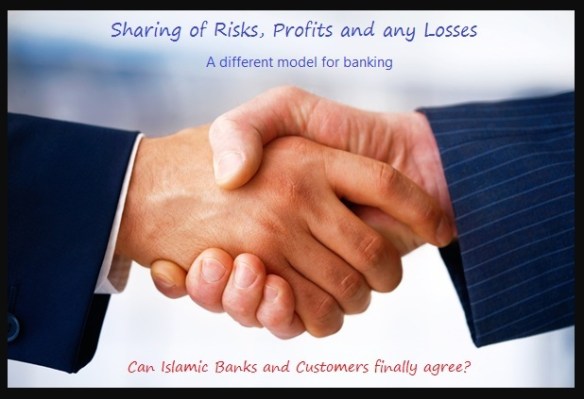
This envisioned model will be something not entirely new. There are already working models, but generally the stakeholders, including the customers, MUST understand (and accept) the concept the risk vs return pay-off of such model.  Something very similar to the risk-taking vision of Islamic financing is Venture Capitalism (although many shudder to the word “capitalism”).

Venture capitalist works on the ratio that in 100 customers, maybe 5 or 10 customers are able to survive their start-up period and have decent returns, and the returns to the venture capitalist is sufficient to cover the losses incurred from the remaining customers. The risks of losing the capital is high, and in the cases of Development Banks, government backing usually covers for loss-making enterprises, so long as it serves a purpose toward the national agenda. But this is the essence of risk-taking, and its corresponding rewards. If Islamic Banking want to expand, the thinking must therefore be expanded into this space, i.e. the realm of Mudharabah financing.

Musyarakah

Other models includes a co-operative model where typically a group of “investors” enter into a collective and co-operative agreement to embark on an entrepreneurial endeavor. The money is pooled to create capital and business is run by the “elected committee” and performance is reported regularly to all stakeholders. Profits are shared according to agreed payout ratios or to be re-invested into the business; losses are borne according to equity of each investor.  And the manager of the business earns a management fee. This is a typical Musyarakah arrangement.

Such models can be easily formalized under Islamic Banking, but we realized the fact that there is a huge monster in the shadows, ready to pounce on efforts to grow the Islamic Banking envisioned by the Central Bank that falls along this route.

CONVENTIONAL BANKING. HUGE, OLD, RICH MONSTERS.

Developing the Islamic Banking in its present form of replication and innovation alongside the huge monster of Conventional Banking has already proved to be a challenging task. Developing a truly “Islamic” Islamic Banking will pose an even greater challenge. Can Islamic Banks afford another gestation period of regulatory upheaval, customer re-education, corporate buy-in, legal re-thinking and more importantly the impatience of shareholder dollars while the kinks of the new model are being smoothened out? Can we afford to fall further behind while we get our new act together? The so-called great momentum of Islamic Banking growth will be lost, and at a risk of losing even further ground as Conventional Banking takes up the slack left opened by Islamic Banking. It is hard to win back customers, if customers’ confidence in the model is no longer there (albeit temporary). To switch to a different banking model, no matter how noble the intention, will put the Islamic Banks right to the sword. It will be “make or break” for all.

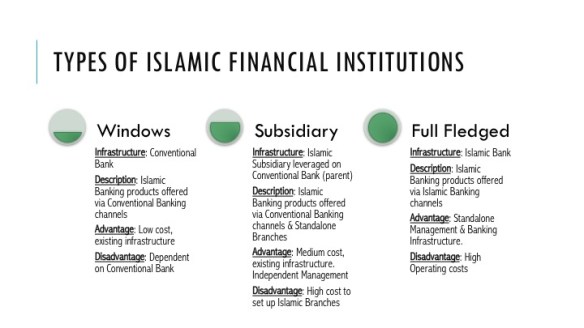
TYPES OF IFI

We will go up against a huge giant which will only get stronger with this. Political-will can help, together with strong regulatory push for industry survival. But the next question to be asked is that, will the market itself be ready for such a shift in thinking? Can they accept that a Bank is no longer a Bank, but instead a partner in their businesses? Do they even want Banks to partner them? Are they willing to share the risks, and therefore the equivalent returns with the Banks? If today they are paying a cost of capital financing at about 7.00% per annum, and earning a net margin on their business at about 15% per annum, under the regime of profit sharing at 70%:30%, are they willing to share their net margin of about 10.50% with the Bank? Alternatively, will the Bank be willing to take the risk of sharing profits if the returns are lesser than 7.00%? What about loss making endeavours? Will only riskier businesses be interested in such models, since presumably such business will not have been able to obtain funding coming from the “conventional” credit assessments? It will be a scenario where the Islamic Banks will “share risks” if it is a high risk customer, and conventional Banks will “transfer all risk” to its low-medium risk customers they onboard.

It will be interesting to finally see the Central Bank’s plans for the future. I am sure there is something in the works, especially after we just had a third research team ask us the same, same question again. “What are the things holding back the Bank from introducing these types of “Islamic” Islamic products?”. The one answer that crops up in my mind.

“That huge, rich monster standing right next to us. Ready to pounce.”

Similar Article: Old Qahwah in a New Cup?

The Death of Bai-Inah

It looks like it’s going to be a very busy year in Malaysia.

It was with surprise that the Islamic Banking practitioners are called to Bank Negara Malaysia (BNM) for the briefing pertaining the use of the contract of Bai Inah. The date was 16th November 2012 and it was a packed room at Sasana Kijang. Something was in the air, and little did we know that it is a meeting the Bai-Inah will be officially “killed” in that meeting.

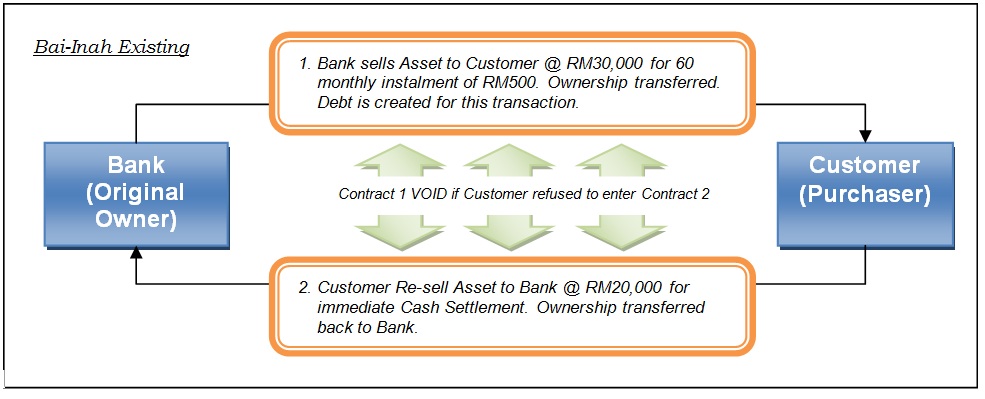
But before we go further, BNM again reiterate that there is nothing wrong with the Bai-Inah as a concept, and the contract is valid in practice. However, the main concern that BNM has were mainly on the way the contract is executed, that it no longer reflects the orginal intention envisioned for the contract. One of the key issues that BNM highlighted is on the issue of “Interconditionality”. This simply means that should if one party sells its asset to another party, at a selling price, the original owner of the asset should not impose on the other party to on-sell it back to the original owner. One party should not compel the other party to re-sell the asset back to the same party. This smacks of shades of “arranged trade” i.e. the use of hilah to validate an Islamic sale, and this compulsion is explicitly captured in legal documents to protect the interests of the original owner. Interconditionality means that for the customer to obtain cash, the customer MUST sell back the asset to the Bank, and failure to do so will result in the whole transaction being void, even if the first sale contract has been completed and concluded.

Bai Inah Pre 2013 (Old Practice)

This doesn’t invalidate the Bai-Inah transaction in the first place, as it is a “willing buyer willing seller” scenario. But the issue arises where the buyer is not willing; what is his options then?

BNM highlighted that the Bai-Inah structure must therefore remove the “interconditionality” where the customer is compelled to sell back the asset to the Bank. The customer, as in any real trade, must be given the option to either sell the asset back to the Bank, or sell it on the open market, where the customer takes the pricing risks for such sale.Bai Inah New

The contention is that the Bank must not compel the customer to only trade with the Bank, but also provide an option to sell this asset into the open market. This effectively separates the Bai-Inah contract into 2 separate Murabaha contract i.e.

  1. the first contract is when the Sale of Asset by the Bank to the customer at a Selling Price (and Asset ownership is transferred to customer), and
  2. the second contract is for the customer to on-sell the Asset now owned by him to a third party or if he chooses, back to the Bank. The customer may even keep the Asset in his ownership, while paying off the debt to the Bank. One contract will therefore not be dependant on the other i.e. the interconditionalty of the sale is now removed.

The uproar in the industry was therefore expected. Many Islamic Banks have built up a substantial portfolio for their personal financing, credit cards and corporate working capital based on the contract of Bai-Inah. The options given by BNM was to either comply with the removal of the interconditionality in the Bai-Inah contract, or move to another contract where interconditionality is less than a problem, such as a Tawarruq or Commodity Murabaha structure. Many Banks have chosen the route of trying to comply with the removal of interconditionality, while other Banks view that the Tawarruq option was the right direction.

Personally, I feel trying to comply with the Bai-Inah requirements without “interconditionality” is at best a temporary measure. The way forward is to look at the Sharia structure of Tawarruq (Commodity Murabaha) and finding ways of making it efficient as soon as possible. This will be the key driver in the Islamic Banking industry in the coming year. And the death of Bai-Inah will be good news for our Middle-Eastern colleagues; one less controversial contract to talk about.

Like I said. It’s going to be a busy, busy year for us, as BNM gave the Banks until 30th January 2013 to either buck up or ship out. Time to burn that midnight oil.

Ethica Institute

Today I came across a very useful site which I feel worthwhile to share with readers. The Ethica Institute of Islamic Finance has this section of a Database for Q&As relating to Islamic Banking, with Scholar-approved answers. I make no guarantee of the “Scholar approved” statement, but reading some of the answers to the questions, it is consistent with the practices and experiences that I have in this limited time in Islamic Banking industry.

I attached their link for readers and hope they can be useful to you too.

 (## No I don’t get a commission for this!)

If there should be any other links that readers may find useful for other readers, don’t hesitate to send the link to me and I will add it to the list of useful link on this website.

Shukran and Assalamualaikum all…

Choosing The Right Option

It is interesting that one conversation I had recently on why there is reluctance acceptance by some Muslims on accepting Islamic Banking products and transaction in their everyday lives. A huge number of Muslims still subscribe to the non-Islamic, riba-based products despite the inroads made by the Islamic Banking industry in coming out with innovative, if not similar products to conventional banking. More importantly, some Muslims still comes up to me and tells me that they do not believe in Islamic Banking products and that the products are a sham or a “hilah” to legitimize riba-based practices. There is no true Islamic Banking products, as most of the products mirrors conventional products, while the remaining products requires substantial documentation and has a higher cost to implement than its conventional competitor. The view is that, if the Islamic Banking products is a sham, then it will be no better than its conventional competitor.

This comes as a surprise as although they are Muslims, their opinions are somewhat harsh on the industry that I feel very attached to.

Someone made a comment that he cannot understand why Muslim puts a lot of emphasis in “pure & clean” food, but do not apply the same concern to the their daily banking transactions. In fact, Riba is the most hated crime in Islam, and even the AlMighty has declared “war” on Riba, and no other sins are accorded such privilege. There are 73 doors to Riba, and the door with the least sin on Riba is equal to the sin of incest between mother and son. To go against Riba-based banking is a fight called upon to all Muslims, and this means total rejection of the conventional banking.

My argument will be that the Islamic Banking is only 3 decades old in some parts of the world; conventional banking has been around much longer. There is a long way to go, and there is a lot of infrastructural work to be done; legal, taxation, land offices, government agencies, central bank regulations. Everything is near greenfield, everything needs to be developed. There will be frustration but it needs to be done and it takes time.

Islamic Banking industry, and its products are not perfect, and no one is claiming as such. There will be a development and gestation period that the industry needs to go through. Outsiders may feel that what has been developed is not good enough, but the internal workings has been in development to satisfy all parties interested in Islamic Banking. Some we replicate from an existing conventional platform to suit our own requirements. There are also various efforts to develop something on our own, instead as just staying as an alternative proposition.

Operational Challenges

A friend said to me, in bafflement of why some of the Muslims still criticize Islamic Banking instead of supporting it, that even if only 10% of the product or service is Islamic, it is still better than 0% that you get under a conventional product. That 10% showed commitment to the industry. 10% is more than nothing. 10%, if that is all it is, it is more than enough for me simply because it is an Islamic alternative to riba-banking.

What we need are solutions, not just highlighting of problems. It is long way ahead for us practitioners but that is part of the fight we have chosen in our profession. The fight to build Islamic Banking industry into a viable, standalone proposition that will benefit all customers. We hope someday the Muslim population especially will make Islamic Banking products as an automatic choice whenever they think about money and financing.

Sukuk Illegal?

The Islamic Banking fraternity was shaken by the view of the prominent Shariah scholar, Sheikh Muhammad Taqi Usmani, that up to 85% of the Sukuks issued up to now may not have been fully Shariah-compliant.

This has forced scholars and practitioners to go back to the drawing board and re-look at their existing Sukuk structures, and the Accounting and Auditing Organisation of Islamic Financial Institutions (AAOIFI) quickly issued guidelines on Sukuk to ease the market worries. Depsite this, the debate is still on-going on how “Islamic” are the current structures of Sukuks and what can be done to mitigate or improve this.

Of course, the Ijarah-based structure of Sukuks remains viable as a Shariah-compliant structure, based on the prominent scholar’s view. Read more below on these issues:

(Help me add more to this by providing links and articles. Thanks)